
TOOLKIT

ECOFEMINIST
SOLUTIONS TO THE CLIMATE CRISIS

Introduction

We are living in a time when the effects of climate change are no longer a distant warning. They are already here. With global warming surpassing 1°C, communities around the world are experiencing more extreme weather, food insecurity, and displacement1. Impacts that ripple across every sector, from agriculture and biodiversity to water, health, migration, energy, and industry2. These impacts are not felt equally. They hit those who are marginalised hardest, deepening existing inequalities3. For instance, in many cases, women depend more directly on natural resources that are threatened by climate change, while also facing social, economic, and political barriers that limit their capacity to cope4.

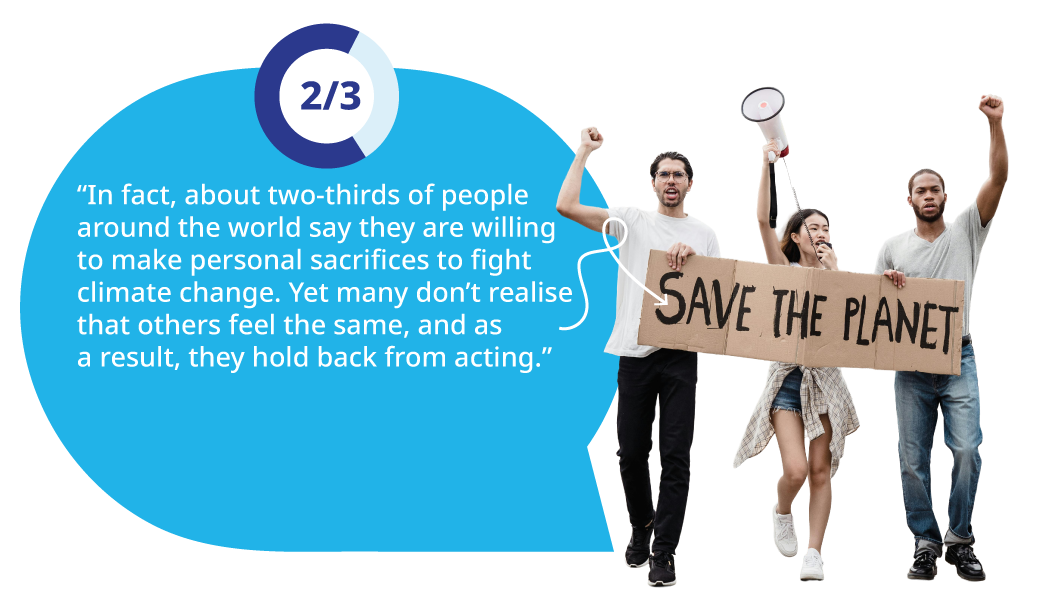
Despite climate change being our reality, advocating for climate action is not an easy task. Today’s political landscape is shaped by backlash, the rise of far-right ideologies, economic instability and attacks on collective action. Climate change communication and advocacy can feel overwhelming, exhausting and disheartening. At the same time, there is a surprising amount of hope. Globally, people do care and want to help solve the climate crisis. And so many people, organisations and groups are already doing great work to take climate action.

In the context of our political landscape, it’s more vital than ever to draw on and uphold the principles of ecofeminism, centring justice and the voices most affected by the climate crisis. This toolkit introduces ecofeminist communication and offers advocacy strategies around key challenges the movement faces today. Both through theory and through practical activities. By working your way through this toolkit, you’ll deepen your understanding of how to engage with diverse perspectives, craft powerful counter-narratives, and contribute to a climate justice movement that is a little more inclusive and transformative. 

Ultimately, the goal is to translate these ideas into real-world action: equipping activists to drive forward a climate justice agenda that is inclusive, feminist, and intersectional. With this purpose, the last chapter introduces the Wheel of Change.
Click here to explore how ecofeminism shapes
and enriches climate justice communication.
Click here to learn about the challenges for
an ecofeminist climate change movement?
Click here to explore Activities on different
ecofeminist approaches
Click here to learn about putting ecofeminist
communication tactics into real-world advocacy action

01. Ecofeminist communication

This chapter explores how ecofeminism shapes and enriches climate justice communication. Where conventional climate change communication often focuses on science, carbon emissions or individual behaviour change, climate justice communication puts equality and justice at the heart of any attempt to tackle climate change: making sure that the people who contribute the least but are most impacted by the climate crisis are centred in the solutions (box 1). Ecofeminism offers a powerful lens for this work. It pushes further by insisting that we cannot achieve true justice without addressing the deeper cultural and structural causes of both gender inequality and environmental destruction. The heteropatriarchal and capitalist system cannot coexist with gender equality or a healthy planet. In other words, environmental degradation is intertwined with systems of gendered, racial, and economic oppression. Ecofeminism calls for climate justice that tackles these root causes together (box 2).

Four core pillars capture the foundation of ecofeminism:

- Intersectionality
- Challenging dominant narratives
- Amplifying marginalised voices
- Fostering collaboration and dialogue

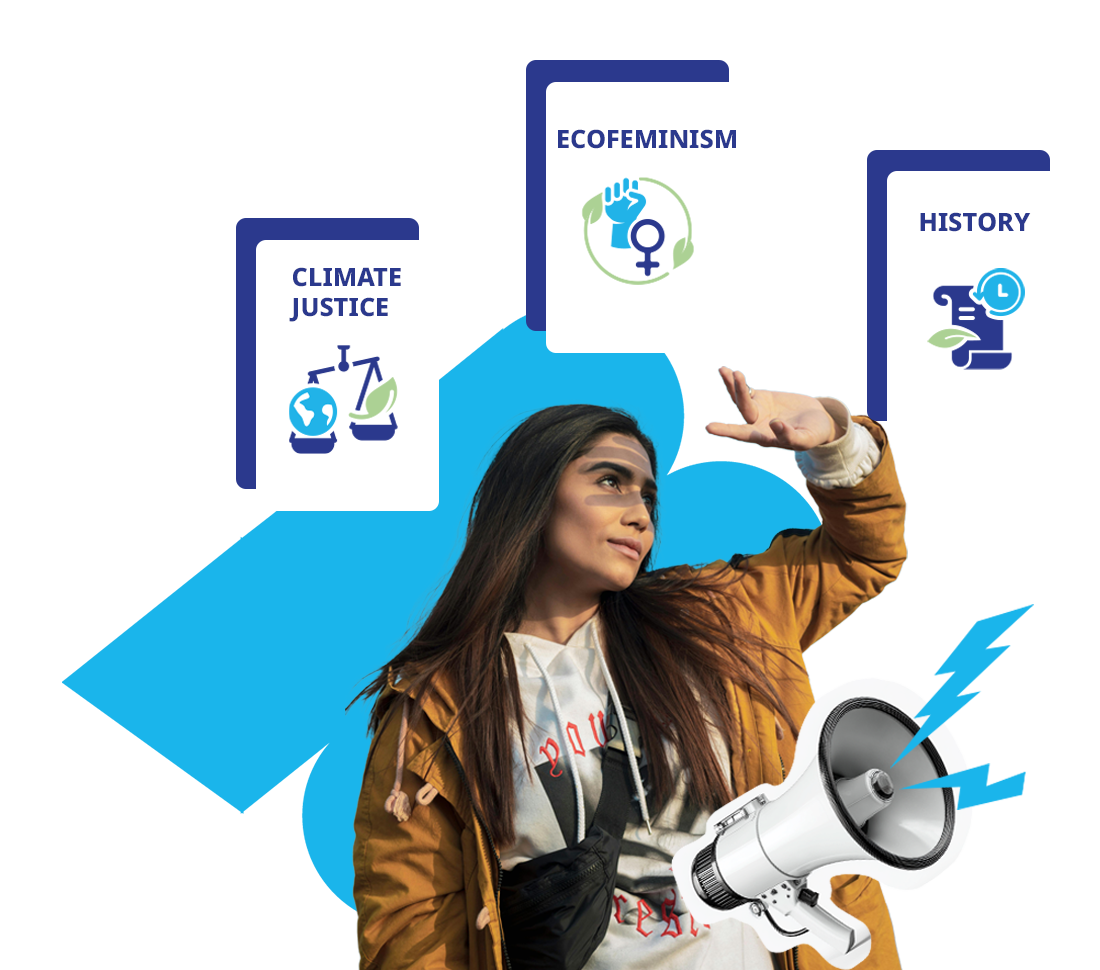
01

02

03

Climate JUSTICE

Climate justice highlights the unequal impacts of climate change, recognising that those least responsible often bear the greatest burdens. Communities with low incomes, Indigenous peoples, and communities of colour, especially in regions with minimal historical emissions, tend to face the harshest consequences, while wealthier regions that contributed most to industrialization experience fewer immediate risks. Those inequities play out on multiple levels. Globally, low-income countries are more exposed to climate extremes. Regionally, existing inequalities, such as economic precarity, caregiving responsibilities, and restricted access to resources, make women and marginalised groups more vulnerable6.

At its core, climate justice is about ensuring fair solutions to the climate crisis. Climate action should not worsen existing inequalities.

A just transition offers a pathway to address this imbalance by guiding the shift to a low-carbon economy in ways that benefit everyone.

01

ECOFEMINISM

To us, ecofeminism means using an intersectional feminist approach when fighting structural barriers that prevent us from enjoying a healthy environment. It means taking a holistic approach and recognizing that everyone’s experience is shaped by different forms of privilege or discrimination depending on our gender, age, race, sexual identity, education, religion, ability or socio-economic status. The climate crisis impacts traditionally marginalised groups differently. For example, women and older people face greater health risks from rising temperatures than young men, and Indigenous communities that depend on agriculture for food and livelihoods are more at risk of losing their main source of sustenance and income7. Recognizing differences is essential for applying an ecofeminist lens to the climate crisis, as it highlights how vulnerability is shaped by intersecting social and structural.

02

A LITTLE BIT OF HISTORY

Ecofeminismis a concept that emerged during the second-wave feminist movement of the 1970s, as a political philosophy and movement that connects the oppression of women with the exploitation of nature in a patriarchal society. Ecofeminism has evolved a lot since its inception, largely due to the work of Lesbian Gay Bisexual Transgender Queer Intersex Asexual Plus (LGBTQIA+) and Black, Indigenous (and) People of Colour (BIPoC) activists who utilise an intersectional conception of ecofeminism.  The term intersectionality was originally coined by activist Kimberlé Crenshaw to explain the dual oppression Black women face and highlight their lived experience at the intersection of racist and sexist structures. Intersectionality has since been expanded on to highlight all multiple oppressions that occur at the same time, such as racism, ableism, homophobia, and environmental injustice. Meaningful climate justice requires addressing these interconnected dynamics together.  
03
Intersectionality

Ecofeminism takes an intersectional approach (box 3), which takes different identities - such as those mentioned above - into account. These identities shape how individuals experience and respond to environmental challenges. For example, an older woman from the middle class living in Germany experiences the climate crisis differently than an Indigenous young woman living in Brazil.

The climate crisis worsens existing gender inequality8. Women in all their diversity are disproportionately affected by the impacts of climate change. They are more likely to experience violence, lose their livelihoods, or die during natural disasters compared to men - and these disasters are increasing in frequency and intensity due to climate change. Women and marginalised genders often have less access to land, income and education. Women carry the majority of unpaid and undervalued care work9. When climate disasters hit, those with fewer resources and less influence have fewer ways to adapt or recover. Solutions for climate mitigation often overlook these gender differences and therefore reinforce existing inequalities.

Challenging the dominant narrative

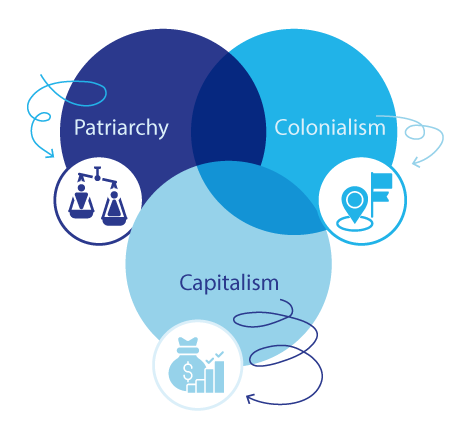
Ecofeminism challenges the dominant narratives that shape how we understand and respond to the climate crisis. By bringing together feminist and environmental critiques, it reveals how the exploitation of nature and the oppression of women are rooted in the same systems of power: patriarchy, capitalism and colonialism.  

Mainstream climate discussions often ignore or silence voices that don’t fit into narrow ideas of expertise or authority. Instead focusing on corporate, market-driven, and elite agendas. Ecofeminism challenges this by refusing to accept climate action that reduces the crisis to carbon targets or shiny technological fixes. Real solutions demand tearing down the extractive economies and power structures that created this crisis in the first place. By exposing and resisting the root causes of oppression and exploitation, ecofeminism reframes the climate crisis as more than an environmental issue, but as a call to transform our systems and our relationships with each other and the earth.  

Amplifying marginalised voices

Ecofeminist communication insists on amplifying marginalised voices. To advance climate justice, we must centre the people most affected by the climate crisis. This includes women in all their diversity, Indigenous communities, racialised communities, and those experiencing poverty. Including these voices ensures that climate policies and actions address real-world injustices rather than reinforcing them. Their lived experiences and knowledge offer valuable insights and practical solutions. Diverse perspectives expand our collective understanding and lead to more effective, equitable, and sustainable climate action.

Creating space for these voices isn’t simply about inclusion. We need to move beyond symbolic participation and instead truly hold space. This means creating environments where people can engage meaningfully and safely. It’s about more than having seats at the table: it’s about sharing power, listening actively, and respecting different ways of knowing and being.

Collaboration and dialogue

An ecofeminist approach to climate change rejects the idea that we can dominate nature or find isolated, technical fixes. It understands that healing the planet must go hand in hand with healing our relationships - with each other and with the earth. At its core, ecofeminist communication is grounded in the belief that meaningful change emerges through collective effort, mutual care and respectful listening.

“If you want to go fast, go alone. If you want to go far, go together”  

Collaboration lies at the heart of this vision. Ecofeminism challenges top-down technocratic models of climate policy that ignore the lived experiences of frontline communities. Instead, it values local knowledge, shared decision-making, and the inclusion of diverse voices. Working together builds trust, visibility, and creates space for learning and innovation. Dialogue brings this collaboration to life. Rather than promoting predetermined solutions, ecofeminist action embraces open, ongoing conversations that allow for disagreement, learning, and transformation. Understanding others’ needs, histories, and worldviews is essential to creating climate strategies that truly work for everyone.

02. What are the challenges for
an ecofeminist climate change movement?
Intersecting social and economic barriers

Climate change is an issue, but I have bigger problems

For many individuals and communities, the urgency for climate action clashes with the pressing realities of everyday life. It is not about denying that climate change is an issue, but rather that more personal, important concerns take priority. When your rent just doubled, your job is on the line, or you’re watching a war unfold near your borders, the climate crisis can seem abstract, even irrelevant. Reality, however, is that climate change doesn’t exist in a vacuum. It intersects with economic struggles, housing shortages, inflation, healthcare access, and even geopolitical insecurity.

Real Industry based vulnerability

For some, the situation is even more complex. Their very livelihoods may depend on high-emission industries. Consider a coal miner in a town where generations have relied on mining, not just for income but as a cornerstone of community identity. Or consider a farmer already grappling with unpredictable weather and market instability. When climate policies introduce new regulations, such as limits on water use, pesticides or methane emissions, it can feel less like a path to sustainability and more like a threat to survival: just another hurdle- one that threatens your ability to survive in your profession.

Political extremism and the spread of misinformation

In recent years, climate action has become entangled with populist rhetoric, politicised narratives, and confrontational policymaking. Right-wing populist movements around the world have challenged the dominant framing of climate change as a collective, science-based global crisis.

Far-right politicians and advocates often downplay scientific expertise and deny the historical responsibility of the Global North in driving the climate crisis. They reject the idea that their countries have obligations in international climate cooperation and often portray climate policies as elitist measures that hurt “ordinary people”. These narratives spread easily when people feel that politics and the economy are unfair and don’t address their everyday problems. Populist leaders use this frustration by positioning themselves as defenders of national sovereignty and the “voice of the people.” Climate policies, particularly those requiring international coordination or changes in lifestyle are portrayed as threats to national identity, economic independence, and personal freedom.

As a result, talk about climate change is increasingly becoming part of broader ideological battles. Instead of focusing on the climate crisis itself, debates become proxy wars for deeper societal anxieties: economic inequality, loss of control, and feeling left out of politics.  

Attack on collective action

In this world of competing crises, the backlash against climate action is no longer just about denial or inaction. It has evolved into a deliberate strategy to divide and disempower people with the intention to help solve the climate crisis. Instead of attacking science directly, opponents of climate justice now frame solutions as threats to livelihoods, culture and personal freedom. These narratives are designed to turn communities against each other, making climate justice look like a fight, not a shared goal.

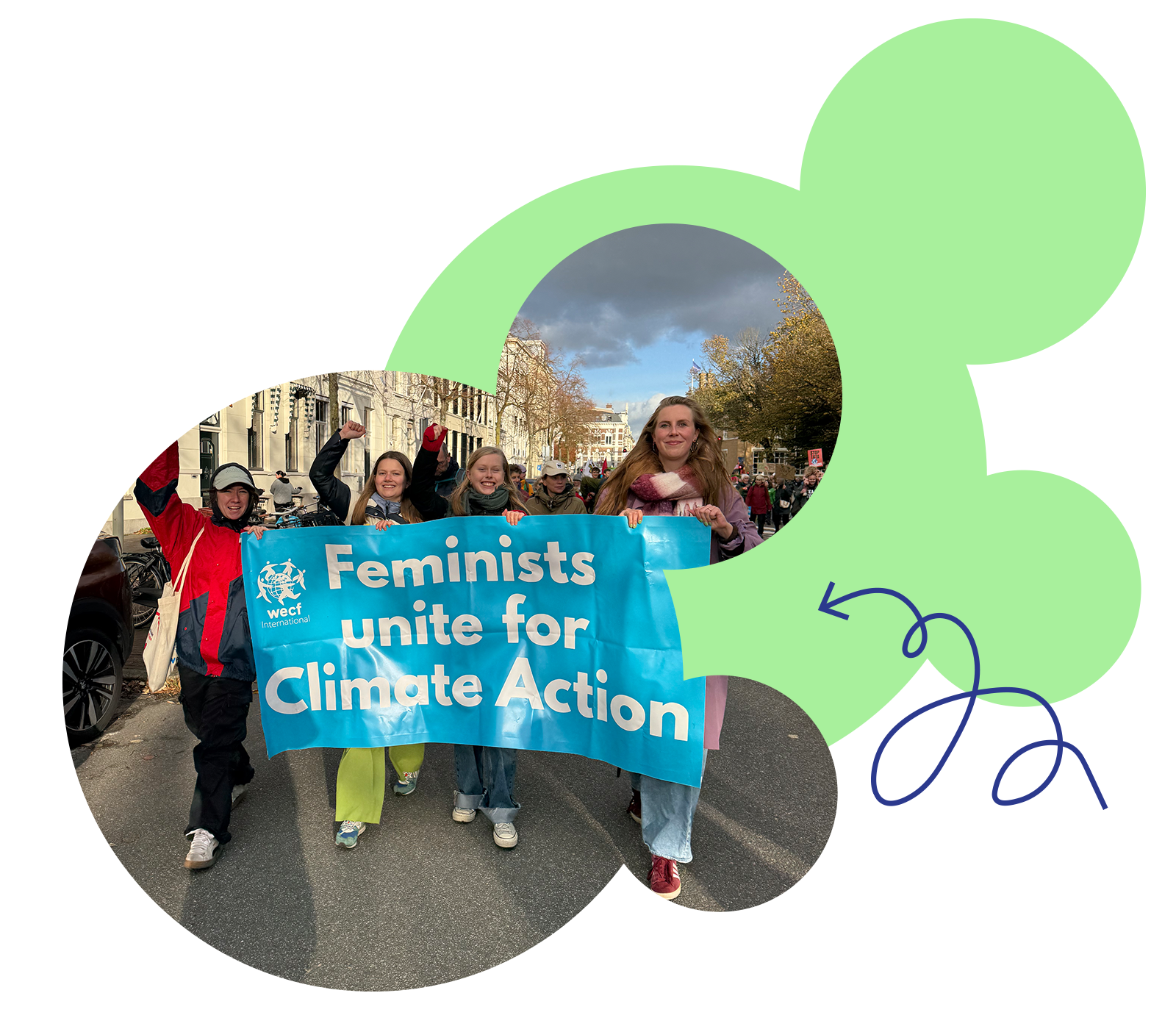
Let’s be clear: those who benefit most from the status quo – the ultra wealthy, authoritarian leaders, and powerful corporations – know exactly what they’re doing. They understand that when people come together, they have the power to demand systemic change. And that is a threat. So, they strike first: criminalising protest, flooding media with false narratives, cutting funding and stroking division. Distract, divide and demoralise. Here is the truth: our greatest strength lies in solidarity. And therefore, we need each othermore than ever. United, determined, and organised collective action can turnthe tide. History shows thatwhen people overcome these obstacles, social movements can transform societies. The Black Panther Party is a powerful example of organised, intersectional resistance (see box 4).   

COLLECTIVE RESISTANCE

The Black Panther Party (BPP) started in 1966, originally focusing on self-defence against police brutality in Black communities. Over time, it grew into a broader civil rights and anti-capitalist movement. They started addressing systemic issues, deeply tied to racial and economic inequality, like poverty, education, healthcare, and housing. Through community-led programs, like free breakfast for children, health clinics and education initiatives, they demonstrated the power of organised collective resistance. They were challenging an entire system built on racial capitalism, inequality and state violence. “Working class people of all colours must unite against the exploitative, oppressive ruling class. Let me emphasize again — we believe our fight is a class struggle, not a race struggle.” Their bold stance helped connect their fight to larger class struggles across the United States. And for that, they were relentlessly targeted by the FBI and government through a campaign of misinformation, infiltration and violence. Why? Because their organising revealed a dangerous truth: when people realise they are not alone, they become unstoppable.

04

The same lesson applies today: the climate crisis, gender inequality, economic injustice, and class struggles are interconnected. They stem from the same broken systems. Ecofeminism reminds us that a just transition demands solidarity across movements. To build collective action, we must create visible, community-rooted climate solutions that improve people’s daily lives. When people see that hange benefits their communities, trust grows. And with trust comes hope, optimism, and the willingness to act together. Standing in solidarity means recognising that, despite different lived experiences, our struggles are linked. The famous words of Pastor Martin Niemöller, an outspoken critic of the Nazi regime, remind us of the dangers of silence: 

First they came for the socialists, and I did not speak out—
Because I was not a socialist.

Then they came for the trade unionists, and I did not speak out—    
Because I was not a trade unionist.

Then they came for the Jews, and I did not speak out—    
Because I was not a Jew.

Then they came for me—
And there was no one left to speak for me.

When injustice is ignored because it doesn't personally affect someone, it will eventually grow until it does  

An ecofeminist approach to climate change rejects the idea that we can dominate nature or find isolated, technical fixes. It understands that healing the planet must go hand in hand with healing our relationships - with each other and with the earth. At its core, ecofeminist communication is grounded in the belief that meaningful change emerges through collective effort, mutual care and respectful listening.

Collaboration lies at the heart of this vision. Ecofeminism challenges top-down technocratic models of climate policy that ignore the lived experiences of frontline communities. Instead, it values local knowledge, shared decision-making, and the inclusion of diverse voices. Working together builds trust, visibility, and creates space for learning and innovation. Dialogue brings this collaboration to life. Rather than promoting predetermined solutions, ecofeminist action embraces open, ongoing conversations that allow for disagreement, learning, and transformation. Understanding others’ needs, histories, and worldviews is essential to creating climate strategies that truly work for everyone.

EXTINCTION REBELLION

Founded in the UK in 2018, Extinction Rebellion (XR) brought a different kind of energy: disruptive, theatrical, and unapologetically urgent. Using tactics like non-violent civil disobedience, mass occupations, and symbolic arrests, XR aimed to disrupt business-as-usual and force governments to confront the reality of the climate emergency.  XR has the ability to frame the climate crisis as a systemic issue that intersects with class and democracy. Their insistence on government transparency, truth-telling and bold action helped make the case that climate inaction is not just an environmental failure, but a crisis of justice and power. Bringing attention to this power imbalance allows their audience to connect the climate crisis to the broader issue of capitalism and outdated systems of power.10


05
03. Ecofeminist approaches:
how do we address the challenges we face?
Activity 1a.
"Beyond Our Own Lens"

The people you work with or that are in your circle might understand your message. However, many are balancing urgent social and economic challenges: paying rent, stable work and housing, affordable healthcare. For someone living on a low income, climate friendly options like installing solar panels can feel completely out of reach. When intersectionality and gender enter the conversation, the climate movement can be perceived as elitist or disconnected. To support deeper understanding of how a just transition affects people differently, participants will practice identifying frames and values behind climate-related comments. We’ll identify what matters most to different people and learn how to connect those priorities to climate action.  

Activity 1b.
"From Differences to Dialogue"

Addressing climate change can be seen as an opportunity to tackle social inequities. Many systems that need to be transformed as part of climate change action, such as transportation, housing, urban planning, and access to clean water, have historically disadvantaged certain communities. By making these systems climate-resilient, we can also make them fairer, healthier, and more inclusive. Creating jobs, improving public health and creating jobs. Climate solutions can be solutions to everyday problems, but the challenge lies in helping people see this opportunity. To do so, people need to see themselves in the story. Bringing more people into climate action does not start with facts, it starts with connection. Through scenario roleplaying, activity 1b lets you practice real life conversation and connection building.  

Activity 2a.
"Crafting Counter-Narratives"

To counter the growing influence of the far right, climate advocates must avoid being sidetracked by their allegations and tactics. Instead, we should focus on strong narratives that place climate action at the heart of social and economic justice11. We focus our energy on the undecided middle. There is already wide support for a fair transition wherein the wealthy carry their fair share, and no one should be left behind. The challenge is making that vision feel worth fighting for. In Activity 2a, we flip the script and reclaim narrative space through storytelling, showing how climate justice can improve everyday life.  

Activity 2b.
"Framing"

Building on the former story telling activity, Activity 2b teaches you specific framing techniques to set the agenda. You learn how to reframe messages about climate, environment, or social justice in ways that connect across different audiences by leading with shared values and showing concrete solutions.  

Activity 3
"Web of Solidarity"

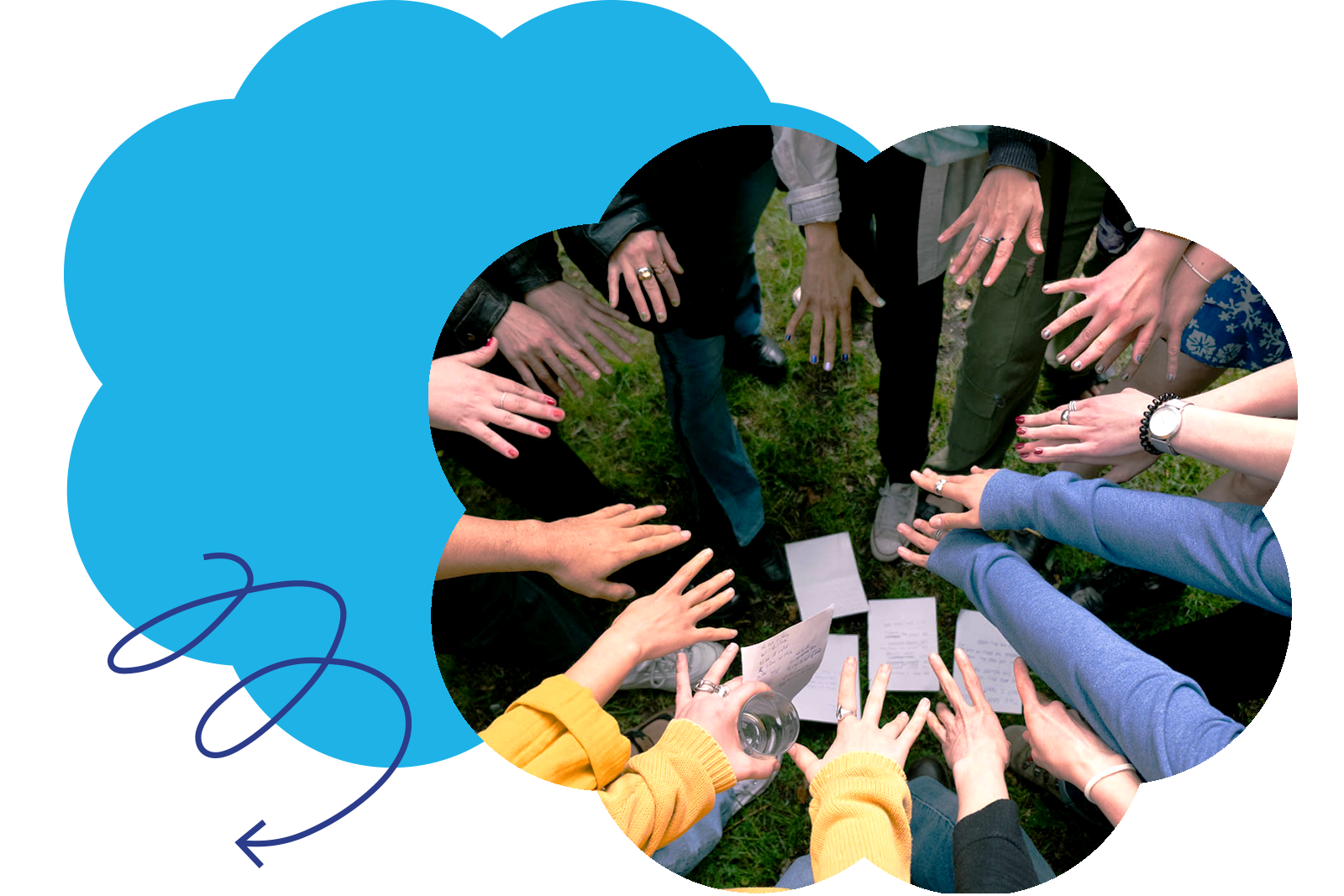
By sharing what we fight for and how our issues connect, we make our collective power visible. Our struggles don’t exist in isolation. Through this exercise, we reflect on the importance of solidarity, interconnectedness, and building strong movements together.   

04. How do we turn ecofeminist communication tactics into real-world advocacy action?

In the previous sections, we have explored and practiced ecofeminist communication tactics. Now comes the next big question: how do we turn these ideas into real-world advocacy action? How can ecofeminist principles shape concrete climate policies and solutions? The starting point is clear: we must engage those with the power to make decisions and ensure that the voices of those most affected are truly included in the process. This change doesn’t just happen in parliaments, or at United Nation summits, it begins with how we frame problems, build alliances, and make our voices heard. This section proposes a roadmap for practicing ecofeminist communication principles into advocacy actions: The Wheel of Change12.

The Wheel of Change reminds us that change is a journey, a process with different stages, a set of signposts for how we might best attempt to do something about the issues that are causing harm to our communities, our society and our world. Here are the steps:

Using the Ecofeminist communication principles above, let's look at each step and see how they can be applied to ecofeminist change-making.

Step 1.
I see something that is wrong

We start the wheel of change by spotting something that is wrong and needs change. In doing so, we take an intersectional lens: we see that the benefits and burdens of climate action aren’t equally shared. We notice the cracks where existing inequalities can deepen if left unaddressed. This is where we recognise something that is wrong.

Let’s look at energy poverty as an example. Energy poverty generally refers to the way in which energy efficiency, household income and energy prices interact and prevent a household from meeting its energy needs13. This means they aren’t able to keep their homes warm in winter or cool in summer14. Women are disproportionately affected by energy poverty15. Their physiological, healthy, economic, and social situation put them and their households at higher risk16. With climate change bringing more frequent heatwaves and harsher winters, the challenges of energy poverty will only intensify.

A central part of tackling the climate crisis is the transition to renewable energy. While this transformation is essential, it also requires effort to protect the most vulnerable social groups. Policies should be crafted in a way that does not exacerbate energy poverty or burden those who are already struggling.  

Step 2.
I find others who agree that something is wrong

Remember: you are not alone. Ecofeminist change-making is rooted in the belief that meaningful transformation grows through collective effort and mutual care. This is a good time to revisit section 2 on “the power of collaboration”. Seek out others who also recognize that something is wrong. They don’t need to be working on the exact same issue as you. In fact, powerful change can happen when environmental organisations join forces with, for example, women’s rights organisations. Everyone brings their own strengths, perspectives, and expertise. What one person might lack, another can contribute.  

Step 3.
We share our vision for change

Collaboration helps build credibility, visibility, and creates an opportunity to learn from each other. Through dialogue, collaboration comes alive. Rather than promoting predetermined solutions, ecofeminist action embraces open, ongoing conversations that allow for disagreement, learning, and transformation. Revisit Activity 1a “Understand different perspectives” to create space for diverse viewpoints and let them inspire your actions.  

Step 4.
We do our research and analysis

Conducting research is essential for grounding advocacy in evidence, context, and credibility. But it’s just as important to use an intersectional lens, one that recognises how overlapping identities such as gender, race, class, ability, and environment shape lived experiences. Without research, this risks reinforcing dominant narratives.

For example, an ecofeminist approach to energy poverty research would look beyond general data and examine how different groups have different experiences. These layers reveal inequalities that are often not seen through broad averages data. Women often do more unpaid care work, have less access to paid jobs, and face growing pay and pension gaps17. These roles affect energy use, men tend to use more energy for travel, while women use more for care and household work18. With less financial freedom, women have fewer chances to invest in energy-efficient home upgrades. When climate policies overlook these differences, they risk missing fair and effective ways to cut emissions.

Research should also shape the solutions we propose. An ecofeminist lens invites us to ask: how can we reshape the transition so that it doesn’t repeat extractive power dynamics? For instance, “Clean energy for all”, sounds good right? But when we do look beyond our borders, we see that the energy transition requires enormous amounts of materials, many of which are extracted from the Global South. The extraction process can cause serious social and environmental harm: unsafe working conditions, loss of biodiversity, water scarcity, and community displacement. At the same time, many of these regions lack access to affordable green energy. Therefore, true fairness cannot be achieved without reducing consumption.  

Step 5.
We make a plan and take action

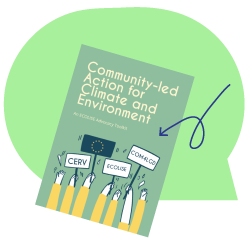
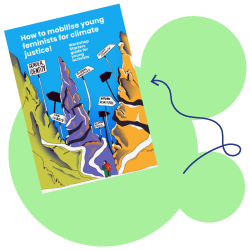
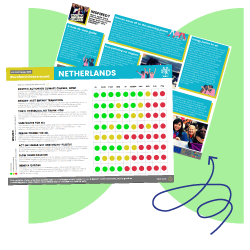
We start thinking about solutions. What do we want and how do we convey that message? Action can take many forms. In this toolkit, we focus on direct engagement with policymakers on different policy levels: local, national, EU and global.

Local-level action
Impactful climate action does not have to wait for national governments. Innovative local policies and grassroot movements can shape climate justice. Local action connects issues directly with the everyday lives of people. This gives a lot of opportunity to work together and to mobilize those affected. To illustrate the importance of local level action, we refer to 4 examples that inform and inspire.

To illustrate the importance of local level action, we refer to 4 examples that inform and inspire.  

National-level action
The national government sets legal frameworks, defines eligibility for support, and determines how resources are distributed. National advocacy goes beyond your community and speaks to the concerns of the whole country. Build the movement on national priorities by connecting local struggles to broader policy debate and amplifying collective voices.

EU-level action
Climate change doesn’t stop at borders. The European Union (EU) is an important link between Member States and global climate negotiations. The EU carries more diplomatic weight in global climate negotiations than Member States alone. The EU also has the possibility to balance differences between Member States. Wealthier countries can support those with more limited resources. To learn more about EU-level action, we refer you to:

Global-level action
Climate change extends human-made borders. No single country or region can solve it alone. Decision-making on climate change must happen at the global level. Global action allows for amplifying voices from communities and ensuring that responsibility and resources are distributed fairly. By connecting movements across borders, advocacy builds coalitions that can shift narratives and create worldwide momentum for systemic change.

Step 6.
We reflect on our journey

The rising number of crises and the pace at which they unfold, can create a constant sense of urgency19. The call for immediate action to halt climate change and safeguard a livable planet, places enormous pressure on us to act now. Yet, we also need time to think. By taking time to reflect on what has worked well, and what could be improved, we strengthen our strategies and make future advocacy more effective. Evaluation keeps us accountable to our goals, helps us to adapt to changing contexts, and ensures that our efforts advance ecofeminist principles. Do not be afraid to notice unintended changes.

Without reflecting, we’ll be unable to stop reproducing problematic values in our actions20.  

Step 7.
We tell the story of change

In a world full of misinformation and downplayed scientific expertise, storytelling is a powerful tool for getting your message out. Storytelling is not just about recounting what happened, or posting a picture of the action on social media, it is about inspiring action and ensuring that outcomes live beyond the moment21.

Humans understand the world, and our role within it, through stories. We rarely accept stories simply because they are factually correct, but we believe them because they resonate with our values, reflect our lived experience, or spark our imagination22.

This toolkit is part of the Funding Fairer Futures project. Want to know more?

Visit:
https://www.wecf.org/funding-fairer-futures/


This toolkit was co-funded by the European Union. Its contents are the sole responsibility of Women Engage for a Common Future and do not necessarily reflect the views of the European Union.